How to Find Industrial Space in Ohio: A Tenant’s Guide to Cleveland, Columbus & Cincinnati
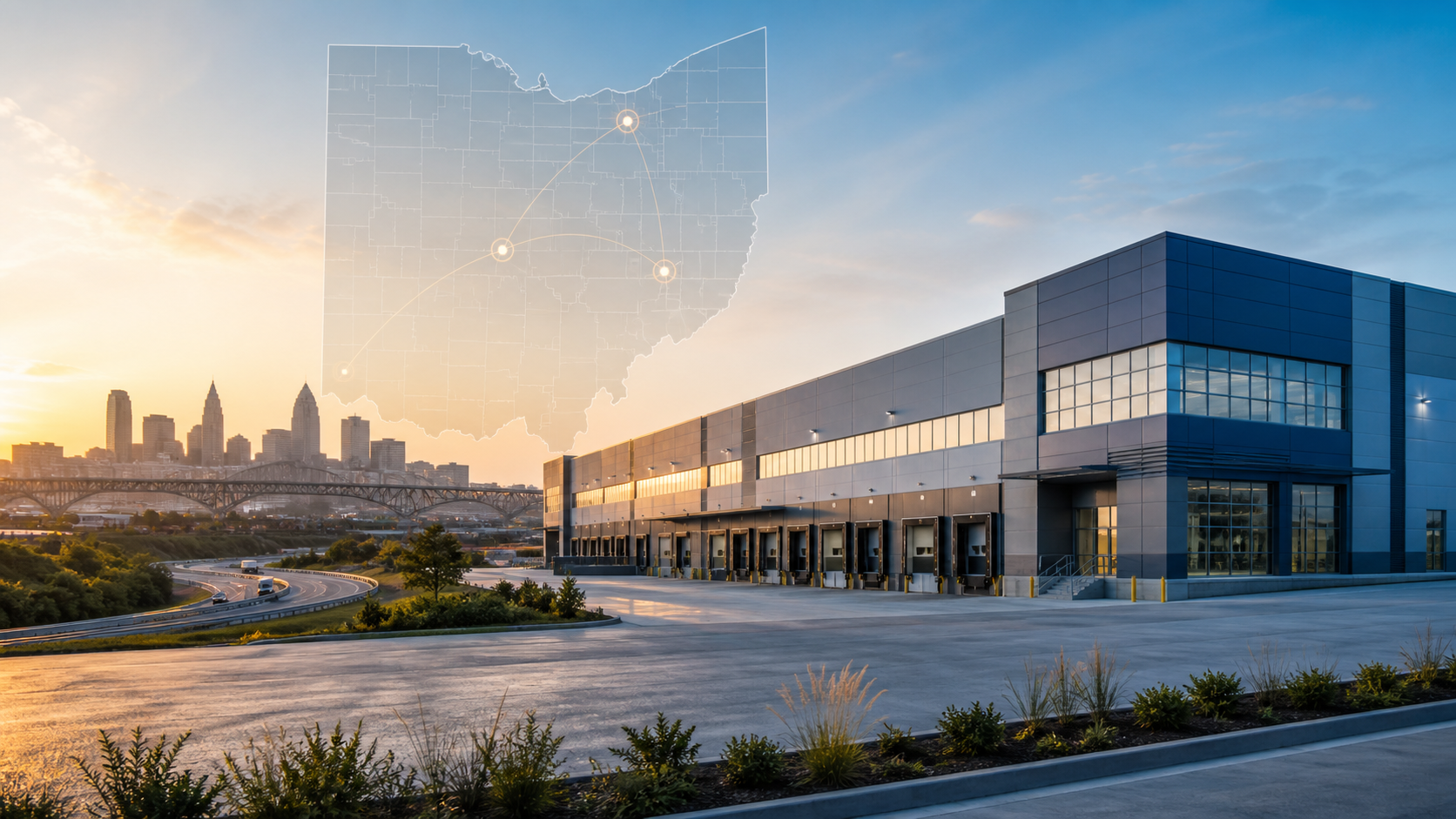
If your company is searching for industrial, manufacturing or distribution space in Ohio, the first question usually isn't which building to choose.
It's which market should we be looking in?
Ohio offers several distinct industrial markets, and Cleveland, Columbus and Cincinnati each have different advantages. Labor availability, transportation, utility requirements, incentives, building inventory and proximity to customers can matter just as much as asking rent or purchase price.
I work with companies evaluating facilities throughout Ohio and the Midwest, and one of the biggest mistakes I see is beginning the search with a list of available buildings rather than first establishing what the business actually needs from its location.
Here is how I recommend approaching an Ohio industrial real estate search.
1. Define the Operational Requirements Before Searching for Buildings
Before looking at properties, establish the requirements that could eliminate a building regardless of price.
For an industrial or manufacturing user, that often includes:
- Required square footage and expansion capability
- Clear height
- Dock and drive-in loading
- Trailer and employee parking
- Electrical power and other utility requirements
- Crane capacity or heavy manufacturing requirements
- Highway and interstate access
- Labor availability
- Proximity to customers and suppliers
- Zoning and permitted uses
- Outdoor storage
- Rail access, when required
- Timing for occupancy
This sounds basic, but it can dramatically change the search.
A 150,000-square-foot warehouse requirement and a 150,000-square-foot manufacturing requirement may look similar on paper while producing two completely different lists of viable properties.
2. Decide Whether Cleveland, Columbus or Cincinnati Best Fits the Operation
There isn't one “best” industrial market in Ohio. The right answer depends on what the company is trying to accomplish.
Cleveland and Northeast Ohio
Northeast Ohio can be particularly attractive to manufacturers and companies connected to the region's established industrial base.
The market offers access to a large existing manufacturing ecosystem, interstate infrastructure and a substantial inventory of industrial properties across communities throughout Greater Cleveland and Northeast Ohio.
For companies requiring specialized manufacturing infrastructure, an existing facility can sometimes provide a significant advantage over building from the ground up.
Columbus and Central Ohio
Columbus has become one of Ohio's most active growth markets.
Its central location, logistics infrastructure, population growth and significant corporate investment have made Central Ohio particularly attractive for distribution, advanced manufacturing and other large industrial requirements.
That growth can also create competition for labor, land and desirable facilities, which should be considered during site selection.
Cincinnati and Southwest Ohio
Cincinnati provides access to both Ohio and the broader Kentucky/Indiana region and can be particularly attractive for companies serving customers throughout the Midwest.
Its interstate connectivity and geographic position make Southwest Ohio worth evaluating for manufacturing and distribution operations where regional access is a major consideration.
3. Don't Limit the Search to Properties Publicly Listed Online
One of the misconceptions about commercial real estate is that an online property search represents the entire market.
It doesn't.
For significant industrial requirements, I typically want to understand three categories:
Actively marketed properties — buildings currently being offered for lease or sale.
Potentially available properties — facilities where ownership may consider a transaction even though the property isn't formally marketed.
Future opportunities — companies consolidating, relocating or building new facilities that may create upcoming availability.
This is particularly important when the requirement has unusual specifications.
The more specialized the facility, the less effective simply searching online listings becomes.
4. Compare Existing Buildings Against Build-to-Suit Opportunities
Companies frequently begin with the assumption that they either need to lease an existing building or construct a new one.
I prefer to evaluate both when the requirement allows it.
An existing building can offer speed and potentially lower upfront costs, but compromises may be required.
New construction can provide exactly the right configuration but introduces additional questions involving land, utilities, entitlements, construction costs and timing.
The correct comparison isn't simply rent versus construction cost.
It is the total operational and financial impact of each alternative.
5. Evaluate Incentives After Identifying Operationally Viable Locations
Ohio and its local communities can offer economic-development programs for companies creating jobs and making significant capital investments.
Those programs can be valuable, but incentives shouldn't turn a poor operational location into a good one.
I generally prefer this sequence:
Operational fit → real estate economics → labor → logistics → incentives.
Once viable locations have been identified, incentives can become an important component of the final comparison and negotiation.
6. Create Competition Before Negotiating
One of the biggest advantages a tenant or buyer can create is optionality.
If ownership knows that a company has only one viable building, negotiating leverage changes significantly.
Whenever possible, I want multiple alternatives competing for the requirement.
That competition can affect more than rental rate or purchase price. Depending on the transaction, negotiations can involve tenant improvements, free rent, building modifications, expansion rights, timing, operating expenses and other economic terms.
The objective isn't simply to find a building.
It's to create enough alternatives that the company can make a well-informed decision and negotiate from a position of strength.
What I Would Do If I Were Starting an Ohio Industrial Search Today
Before contacting landlords or touring buildings, I would create a one-page requirement covering the company's operational needs, geography, timing and economics.
Then I would evaluate Cleveland, Columbus, Cincinnati and any relevant secondary Ohio markets against those requirements.
Only after that analysis would I narrow the search to individual properties.
That process helps prevent a common problem: falling in love with a building before determining whether the location and economics actually make sense for the business.
Need Help Evaluating an Ohio Location?
I advise companies on tenant representation, site selection and corporate real estate strategy throughout Ohio and the Midwest.
If your company is considering a new industrial, manufacturing or distribution facility in Ohio, I'm happy to provide an initial assessment of the market, available alternatives and the factors I would consider before beginning a formal property search.
About Scott
Commercial Real Estate Advisor
Mohr Partners
Ohio & Midwest Tenant Representation | Site Selection | Corporate Real Estate